The word on the door
What duende means in flamenco
Duende is flamenco's word for the moment a performance takes hold. Where it comes from, what Lorca said in 1933 and what it means for a night in Valencia.
Book the café show ↗Quick answer
Duende is the flamenco word for the moment a performance takes hold of performer and room alike. Federico García Lorca gave the idea its best-known form in a lecture in Buenos Aires in 1933, calling it a power rather than a work and linking it to what the singer Manuel Torre called black sounds. The Valencia café named after it describes duende as a ‘pellizco’, a pinch felt in the soul.
Where the word comes from
On English Wikipedia the word duende is traced to ‘dueño de casa’, the master of the house, which is also the root of the household sprite of Spanish folklore. Everyday Spanish can still use duende for a mischievous spirit. Flamenco uses it for something larger: a peak of feeling, expression and truth that people know when they hear it and struggle to define. To ‘tener duende’ is to have it, and that is high praise. No technique produces it and nobody can teach it, which is why it helps to know the word before a show. The term is closely tied to Andalusian folk song and to flamenco.
Lorca's lecture
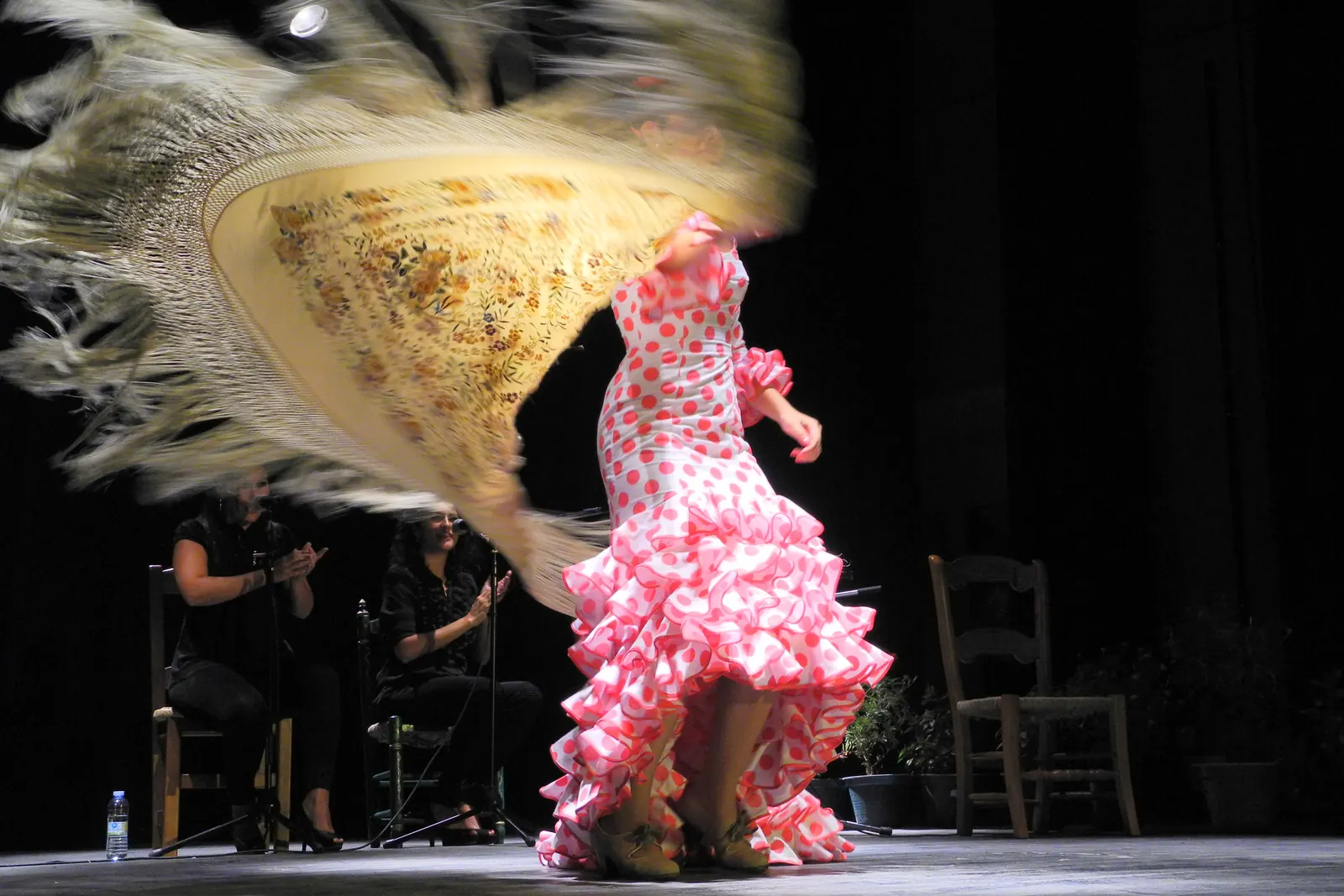
The idea owes its modern fame to the poet Federico García Lorca, who first developed it in a lecture given in Buenos Aires in 1933 under the title ‘Juego y teoría del duende’, Play and Theory of the Duende. Wikipedia summarises his argument: duende is a power, not a work, and a struggle, not a thought. He tied it to irrationality, earthiness, an awareness of death and a touch of the diabolical, and set it against mere style, virtuosity or classical rules. Every art can have it, he said, but music, dance and spoken poetry give it the widest range. Reading it now, the claim is simple to state: duende is not a technique, and it cannot be ordered or taught like a drink.
Black sounds
Lorca quoted a flamenco figure, Manuel Torre, who said that everything with black sounds has duende. Wikipedia reads that as emotional darkness. The same dark note runs through cante jondo, the ‘deep song’ at the most serious end of flamenco, which Wikipedia traces to Andalusian folk music. Lorca was among those who took part in the Concurso de Cante Jondo held in Granada in 1922 under Manuel de Falla's lead, and in 1931 he gave a conference on keeping the tradition alive. Falla's view, which Lorca cited, was that the siguiriya is the song of that deep tradition. Wikipedia adds that flamenco tends to carry the character of a people shaped by hardship and diaspora.
Read next: Flamenco palos: a listening guide
Duende against polish
Lorca set duende against style, virtuosity and classical rules, and that changes how you can judge a show. A technically flawless performance may leave a room cold, while a rougher one can hold it still. Wikipedia reads his lecture as an argument that emotion and risk matter more than polish. For a visitor it means you do not need to know whether a dancer's turn was perfect. You only need to notice whether the room goes quiet and still, as it does at the moments flamenco audiences wait for. Seen that way, a small room is a fair place to find out.
What the café says about it
The Valencia venue took the word as its name and explains it on its own site. It describes duende as an ineffable pinch felt in the soul, one that appears only at very special moments and comes from the depth of a throat, the resonance of guitar notes or the tearing movement of a body that seems about to break. The same site invites visitors to come and feel it. That is an invitation, not a promise, and the fair reading is that a ticket buys an hour of live flamenco in which duende may or may not arrive. Reading that sentence before you go sets the right expectation.
What you actually hear and see
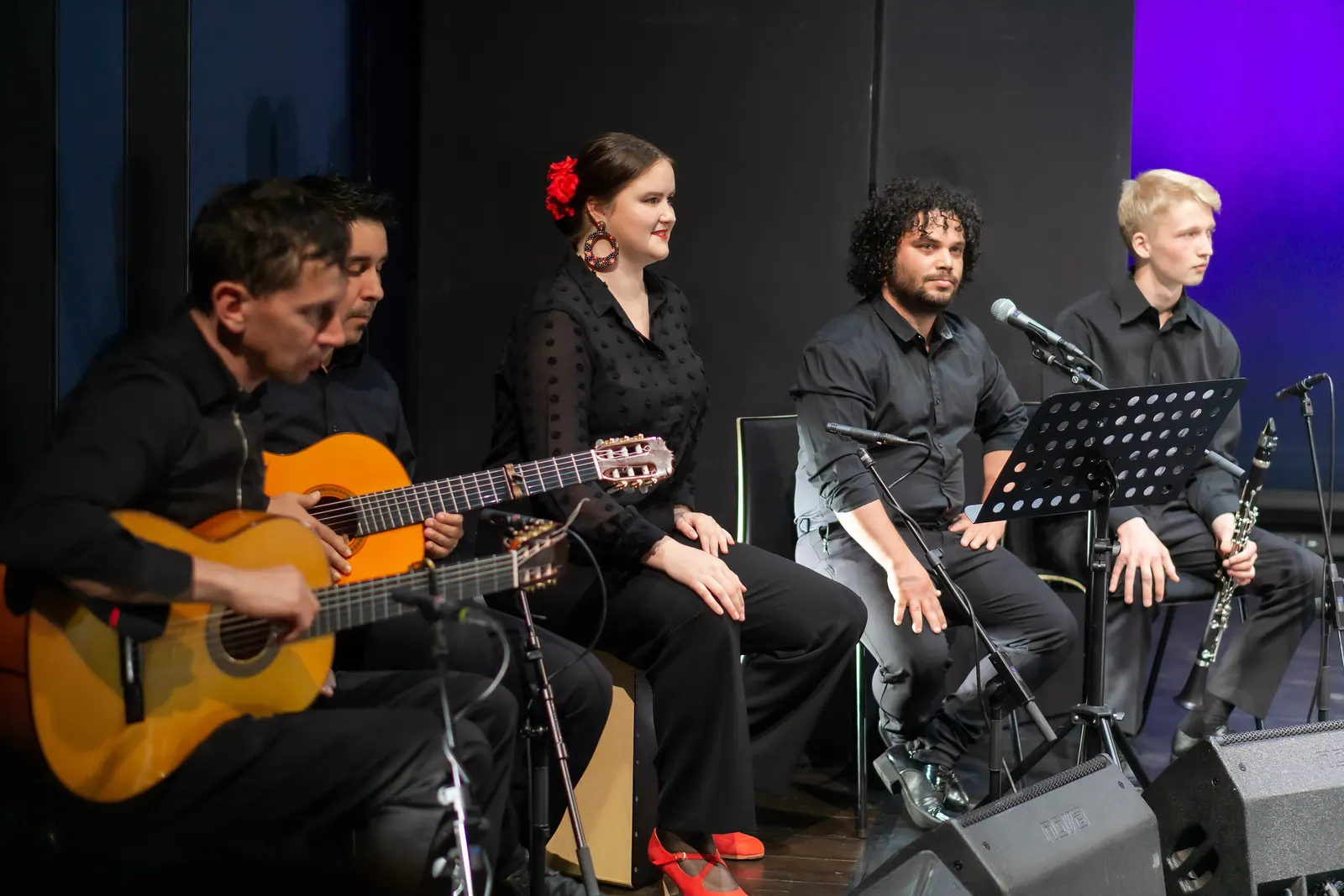
In UNESCO's account the art has three parts. Song comes from men and women, ideally seated and without a chorus, and carries a wide range of feeling in short, plain lines. The guitar has moved well past accompanying, and clapping and stamping thicken the sound. The dance it calls one of passion and courtship. A café this size lets you follow all three at once, since you can watch the singer and the guitarist as closely as the dancer. With lyrics that brief, the sense of a song often reaches listeners who do not know the words.
How to listen
The venue's own page on the art gives a simple way in. The song, it says, carries history and pain, from the deep ‘quejío’ to festive melody. The guitar is the backbone, a harmony, a rhythm and a ‘call’ that guides the dance. The dance is percussion and body language: zapateado, the footwork, and braceo, the arms. Watch for the call from the guitar and the answer from the feet. Notice when the room goes quiet. Those are the moments flamenco audiences wait for, and they are easier to spot if you are not filming them. None of this needs Spanish; it needs attention. The venue's three headings, cante, toque and baile, are a ready-made way to divide your attention across the hour.
Words to know before the show
A few Spanish words turn up in every account of the art, and the venue's own page uses most of them. They stay in Spanish even in English writing about flamenco, and they are short. Knowing them lets you follow a conversation about the evening afterwards, and makes the page a venue prints on its wall or its website easier to read. Learn two or three and the rest will follow as you hear them. They are all words the art uses about itself, not tourist labels.
- Cante: the song, the voice that carries history and pain
- Toque: the guitar, the backbone of the sound
- Baile: the dance, percussion and body language
- Palo: a named style, with its own rhythm and mood
- Quejío: the deep cry at the heart of a song
- Llamada: the guitar's call that guides the dance
The palos you may hear
Wikipedia counts over fifty palos, the named styles of flamenco, each with its own rhythm and mood. The venue's page names several, among them tientos, seguiriyas, tarantos, tangos, cantiñas and fandangos, and says they carry the joys and sorrows of life, work and celebration, love and heartbreak. It describes them as dozens of different styles with different rhythms and melodies. The artists choose the programme, and the venue's calendar changes from one run of dates to the next. Read the names as a guide to listening, not as a running order, and look at the listening guide for six of them in more detail.
Can a small café have duende
Lorca would probably say yes, because he did not tie duende to a grand stage. He linked it to a performer's struggle and to the instant, and he said any art can have it. UNESCO's entry gives flamenco a southern heartland and says the art is handed down through families, social circles and clubs, which are small rooms where people gather. A café in Valencia sits inside that tradition of small rooms, even though it lies far from Andalusia. The same entry lists religious festivals, rituals and private parties among flamenco's settings, so the stage is only one of its homes.
Who this isn't for
Anyone hoping for a guaranteed climax, a choreographed spectacle or gentle background music is chasing the wrong thing in duende. Flamenco at close range can be loud, intense and raw, and some of the singing is deliberately harsh. The venue's own description is of an art that can tear at the body. If you would be uncomfortable with that intensity at arm's length, a larger theatre show gives you more distance. The venue's site is open about this: it says duende shows itself only at very special moments, which is another way of saying it cannot be scheduled. Visitors who prefer a quiet, polite evening may find it more rewarding to listen to recordings first.
Frequently asked questions
What does duende mean?
In flamenco it means a heightened state of emotion and truth in a performance. The word comes from ‘dueño de casa’, master of the house, and is also the name of a household spirit in Spanish folklore.
Who made duende famous?
Federico García Lorca did. His 1933 lecture in Buenos Aires, ‘Juego y teoría del duende’, set out the idea, and he quoted Manuel Torre on black sounds.
Will I see duende at the show?
Nobody can promise it. The venue itself says duende appears only at very special moments. A ticket buys an hour of live flamenco, and duende may or may not arrive.
Is duende only for flamenco?
No. Lorca said every art can have duende, though music, dance and spoken poetry give it the widest range. Wikipedia traces the term to Andalusian folk song, canto jondo.
Do I need to understand Spanish?
No. The song is in Spanish, but the dance, the guitar and the expression of the singer carry most of the meaning. Reading about the palos beforehand helps you follow what you hear.
Sources
- Café del Duende, El flamenco (the venue's page on the art)
- Café del Duende, the venue's own site
- UNESCO's page on flamenco (2010 inscription)
- English Wikipedia on duende and Lorca’s 1933 lecture
- English Wikipedia on cante jondo, the deep song
- English Wikipedia on palos: rhythms and families of styles
- English Wikipedia on flamenco: venues, regions, history